
Potomac City Directory Shelves
No dedicated Potomac-only city directory run survives. Instead, the useful Potomac historical shelf sits scattered across Montgomery History, MCPL, and regional holdings. The table lists only Potomac coverage documented in local research. Regional Nelson and Polk volumes require a catalog check first, since a name only counts as a Potomac match after the year, place label, and address all agree.
| Collection | Years | Where Held | Access |
|---|---|---|---|
| Boyd, History of Montgomery County, Potomac directory appendix | 1879 | Montgomery History Digital Repository | Free digitized item; community, occupation, and institution categories |
| Nelson’s Washington Suburban Directory of Maryland & Virginia Towns | 1912, 1916, 1917, 1918, 1923 | Montgomery County historical collection identified in the research guide | Catalog or shelf check; regional, not Potomac-only |
| Polk’s Washington Suburban Directory | 1927–28, 1930–31 | Montgomery County historical collection identified in the research guide | Catalog or shelf check; regional name and reverse-search lead |
| Montgomery County census abstracts | 1776–1900 | Montgomery History | Local collection; pair with federal census releases |
Treat the Potomac volume itself as the authority, not the catalog blurb. A catalog description may name a series without proving that every Potomac community or year sits inside it. Later telephone books, yearbooks, and reverse directories deserve the same item-by-item caution, since their Potomac coverage varies from volume to volume.
Potomac Records Before Modern Labels
Montgomery County dates to 1776. The first county land and court material in the Archives guide begins in 1777. That record trail runs long. It predates modern suburban road names and today's Potomac CDP label. So when a Potomac directory clue runs thin, older county records may point to a tract, a post office, a road, or a household name. The guide below may not always match a familiar Potomac locality. The Maryland State Archives Montgomery County holdings lay out that setting. They cover county land, tax, census, marriage, and court series. Montgomery History abstracts can lead from a readable Potomac name or tract back to the original record book at the records office.
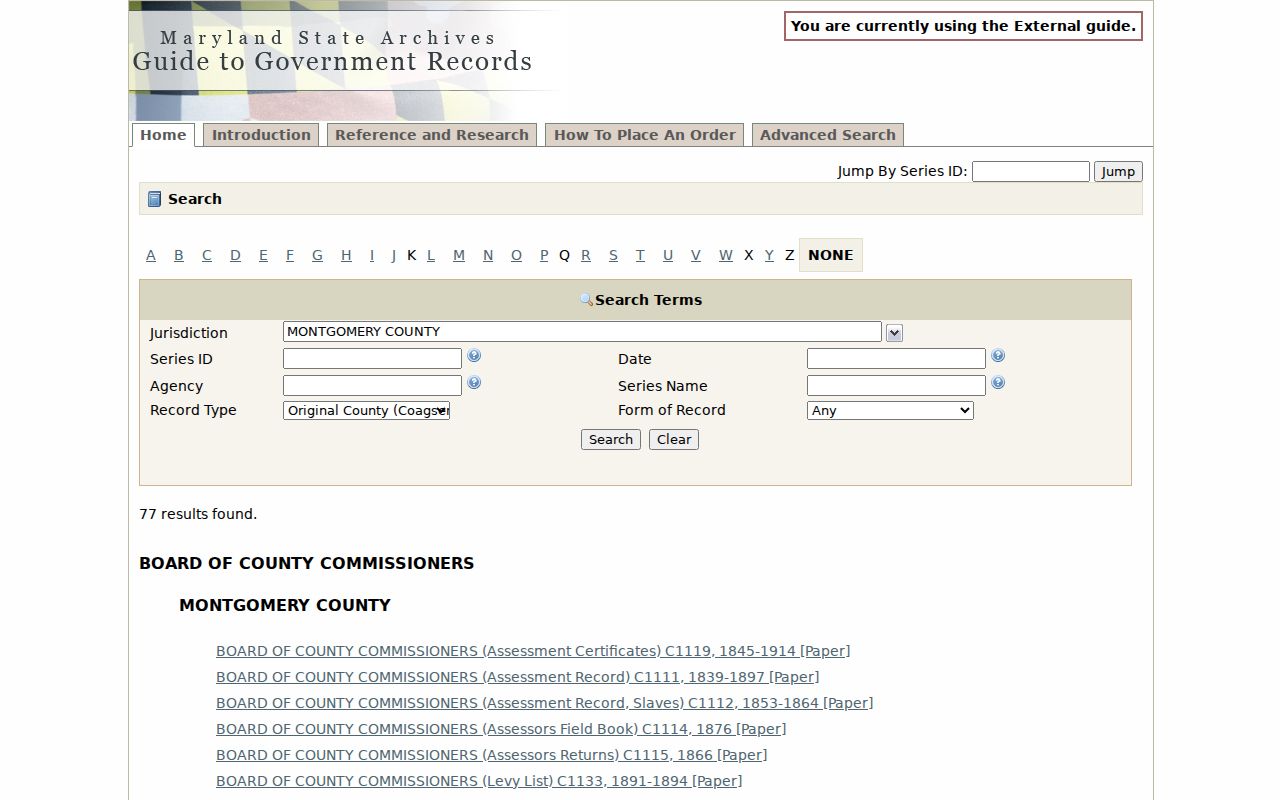
This timeline explains why a Potomac resident lookup so often crosses institutions. A historical Potomac name may surface in an abstract, a county index, a newspaper, or a directory-style appendix long before it appears under a familiar Potomac city label.
Potomac and the 1879 Appendix
The digitized 1879 Boyd volume works as a Potomac directory-like source. It is not a household census, though. The appendix sorts people and places by post office. Merchants, manufacturers, professors, farmers, and tobacco planters follow. Mechanics, mills, colleges, schools, and churches come next. That editorial structure can reveal a Potomac community tie or institution. It can then guide you toward a census. It can also point to a deed at the recorder's office, a church register, or a newspaper. The digitized Boyd history and directory appendix shows the arrangement itself. Read its categories as an 1879 editor's scheme. They are not proof that every county resident appears. They are not a promise of a later-style address field.
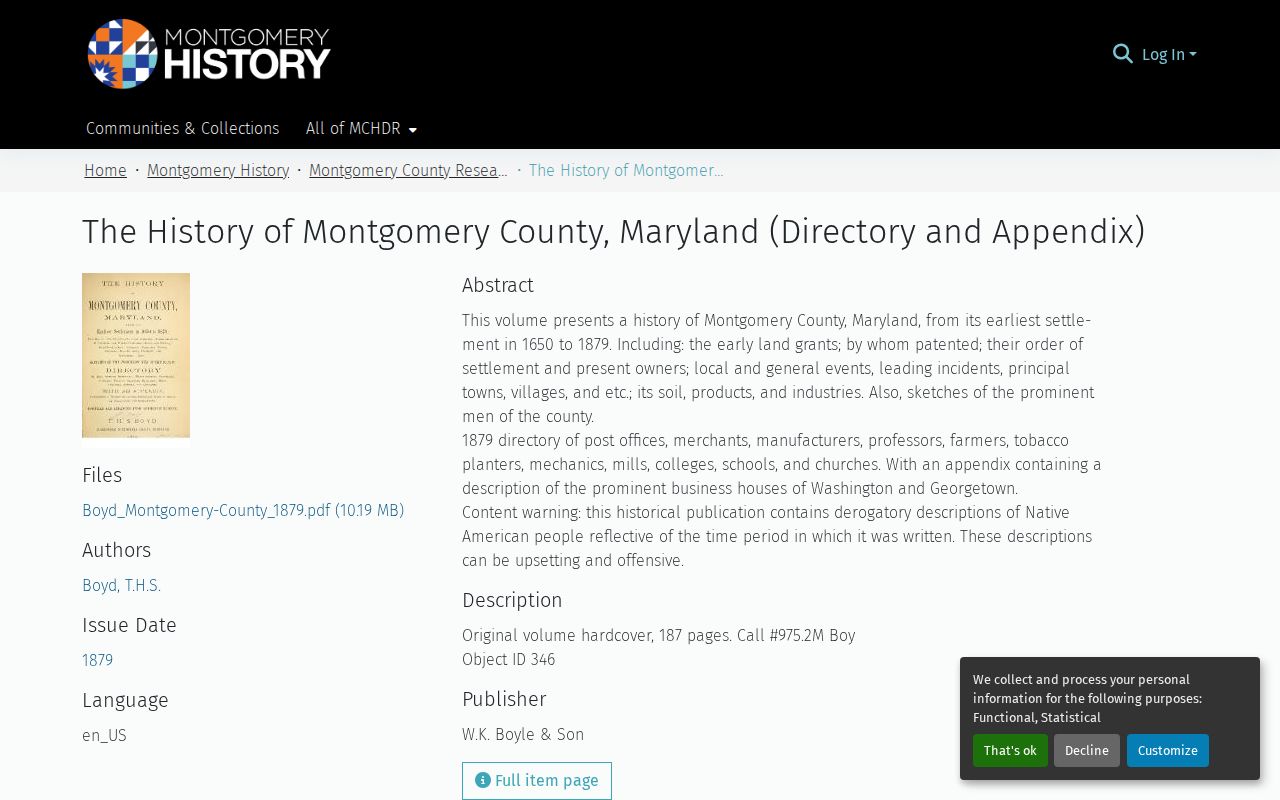
A printed category still carries real value for a Potomac street directory hunt. It can supply a spelling, a community, an institution, or an occupation that narrows a more formal county record without overselling what the appendix holds.
Potomac City Directory Regional Years
Montgomery History's suburbanization research guide names Nelson's regional directory for 1912, 1916, 1917, 1918, and 1923. Polk's regional run covers 1927–28 and 1930–31. Those Potomac dates make useful waypoints between censuses. The guide does not, however, establish a complete Potomac-only holding. So search Potomac alongside Bethesda, Rockville, Washington suburbs, a Potomac road name, and alternate place labels. Reverse or criss-cross searching helps most when a Potomac address is known first. The regional shelf exists in local collections. Exact Potomac criss-cross volumes are not identified online. Ask for "reverse directory," "criss-cross," "telephone directory," "Washington suburban directory," "Nelson," or "Polk" in the MCPL catalog. Then try the Montgomery History collection. Note: Keep the printed year beside each name or address. A regional listing may be a dated subscriber clue rather than a complete household record.
Reading a Potomac City Directory
Every Potomac city directory entry deserves a field-by-field reading. The 1879 Potomac item follows its own category structure. Later suburban volumes lean on conventions for names, addresses, telephone exchanges, spouse or household notation, and abbreviations. Do not project those conventions onto the 1879 page. Photograph or copy the Potomac abbreviation key before you interpret a cramped line.
| Publication and year | Identifies the Potomac edition and prevents a later assumption from being attached to an earlier listing. |
|---|---|
| Page or section | Shows whether the item is a community list, institutional category, name entry, or reverse-address line. |
| Name as printed | Preserves Potomac initials, suffixes, spelling variants, and any cross-reference. |
| Address or community | May be a road, post office, suburb, or other locality label rather than a present address. |
| Other notation | Later volumes can include occupation, spouse or household notation, a telephone, a business or institution, and abbreviated markers. |
- Criss-cross directory
- A section arranged by address, used to locate a subscriber or occupant clue from a known street.
- Householder index
- An arrangement that points to the named household contact, which may not include every person at the address.
- Abbreviation key
- The volume’s explanation of short forms for street, institution, telephone, or personal notation.
A Potomac cross-reference or reverse line is a lead, never final proof of identity. Weigh the year, locality, and name against an independent dated Potomac record first. Only then combine people who share a similar name.
Potomac Directory Names Need Context
Potomac's present CDP boundary is not a historical township or city line. Older county-wide enumeration and directory material may use a post office, a rural tract, a road, a nearby community, or a plain Montgomery County label instead. That is a records-geography quirk, not an error in the volume. Pair any Potomac directory result with the legal tract or lot when available, plus the post office, the road spelling, and the household name. A link between a Potomac postal label and a modern place name helps. It does not stand alone. This check matters most along the rural and suburban edges of Montgomery County, where a past residents search can otherwise pull in the wrong households.
Trace Potomac City Directories
Potomac family research works best when it moves through dated entries rather than isolated names. Begin with the sharpest Potomac directory clue you have. Then compare nearby editions and a census release for the same household. Federal census schedules from 1790 through 1950 are public under the 72-year release rule. Each later census opens 72 years after its enumeration. Census details on household composition, age, birthplace, and occupation help test a Potomac identity. They cannot prove ownership on their own.
- Record the Potomac directory year, exact name, address or community, page, and every abbreviation in the first located entry.
- Check adjacent available Potomac directory years and, where present, the reverse section for the same address.
- Compare the entry with the closest available federal census, using household composition and other dated details as identity checks.
- Use a deed, probate item, church register, cemetery record, or newspaper notice to close a gap or test a move.
- Preserve variant spellings and place labels rather than forcing them into a modern Potomac address.
A name that vanishes from a Potomac directory can mean many things. The person may have moved. A subscription lapsed. A label changed, or an edition was skipped altogether. Death is another possibility. The dated Potomac evidence surrounding the gap tells you more than the absence itself.
Potomac Library and Shelf Checks
Potomac Library and the MCPL branch system offer public computers, catalog access, photocopying or printing, Ask-a-Librarian help, and interlibrary-loan requests. Potomac Library itself serves as a Potomac branch access point. For deeper Potomac material, look to Rockville Memorial Library. That branch holds local newspapers, reference books, genealogy databases, and regional directories. The Potomac branch listing is the source shown here. Database access can depend on a library card or login. Electronic genealogy offerings shift over time. Confirm a Potomac database or shelf item before making the trip.
Ask for a Potomac title by its full directory name, year, and regional wording. That precision makes any shelf check faster. A librarian can also help you tell a Potomac catalog hit from a volume you can actually pull and read.
Potomac City Directory Companions
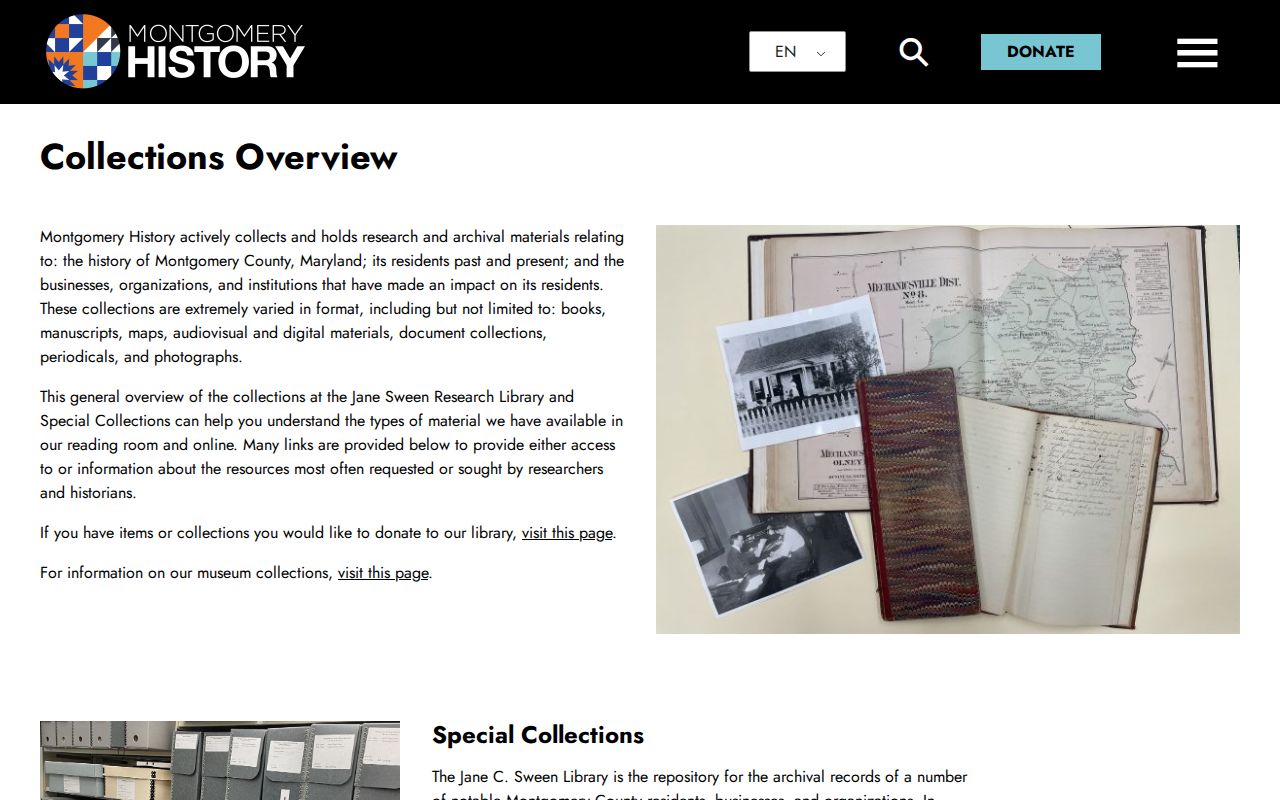
Montgomery History's collections overview names the Sween Library in Rockville. That library is the principal local-history collection for Potomac research. Its PastPerfect catalogs cover library holdings, archives, photographs, and artifacts. Research materials there include biographies, published county records, church registers, and newspapers. Cemetery records and property history are also available. These Potomac companion sources are ideal for testing a name. They suit an address pulled from a historical volume just as well. Early abstracts cover wills, marriages, land records, tax assessments, and county census material. Holdings also include the 1867 Commissioner of Slave Statistics. Mutual Fire Insurance Company policies from 1848 to 1925 are part of the collections too. An abstract is a readable index or summary pointing toward an original record. It is not a substitute for the original where exact wording matters.
Newspapers add context a directory cannot. Montgomery County Sentinel material spans 1855 to 2020. Montgomery County Gazette material runs from 1960 to 2015. Both can supply Potomac notices, obituaries, community items, and address clues, though access and copy rules vary by collection.
Potomac’s 1867 Genealogy Record
The 1867 Commissioner of Slave Statistics report is held through Montgomery History and Archives. It stands as a specific Potomac county genealogy source for formerly enslaved people and their families. Approach it with care. Pair it with the 1870 census, wills, land records, church materials, and cemetery evidence. Those Potomac records can supply names and kin connections. They also add places and later details a directory alone may never preserve.
Montgomery History also holds tombstone-inscription cards from 111 cemeteries. These come from family burying grounds surveyed in the 1970s. Montgomery Planning's broader county inventory identifies 269 known sites, including lost cemeteries. Some sensitive details are withheld. Treat this Potomac material as historical evidence rather than a current-address source.
Potomac City Directory Timeline
The documented Potomac dates form a useful local chronology. No continuous publication run needs inventing. Montgomery County's early records start in the 1770s, the Boyd appendix appears in 1879, and Nelson's regional volumes span selected years from 1912 through 1923. The named Polk runs follow in 1927–28 and 1930–31. Later Potomac newspaper collections extend the dated trail further still.
- 1776–1777: Montgomery County is created, and the Archives guide begins the county land and court record trail.
- 1879: Boyd’s county history publishes a directory appendix organized by community, occupation, and institution.
- 1912–1923: Named Nelson regional directory years provide suburban reference points.
- 1927–1931: The documented Polk regional runs add later name and reverse-search possibilities.
Once a historical date and place are firm, shift to a modern record chain. The Potomac Street Directory keys its entries to current addresses. The two paths meet at the address. But they answer different questions from different eras.