
Finding Potomac Residents by Record
Resident research in Potomac works best as a short chain rather than one name search. Start with an address. That identifies an assessed parcel and its recorded owner. A deed then supplies a prior owner, a legal description, and a recording reference. A historical household needs different sources. Montgomery History collections, newspapers, and county census material add the time period a current parcel card cannot supply. A court or estate result can confirm a record trail. But a public summary is not the whole case file.
Pick a source for what it can actually prove. Property and land indexes track ownership. They also track a recorded party, not every person in a household. The personal Maryland voter form works only when you already know the registered name, date of birth, ZIP code, and street number. Old directories can serve as broad community evidence. Yet a listing there might be a subscriber. It might be a business, or one named householder rather than a full family roster.
- For a known Potomac address, use SDAT Real Property Data Search to obtain the parcel account, owner field, sale references, and deed liber or folio.
- Carry the deed reference or tax account to MDLandRec, then compare the named grantor or grantee with the address and legal description.
- For a person who can supply the required details, use the Maryland Voter Lookup to check registration information and districts.
- For a former Potomac household, search the Montgomery History catalog, county newspapers, and the regional directory shelf before assuming a modern address existed.
- When a defined county record is absent online, send a focused request to its custodian under the Maryland Public Information Act rather than asking for a newly created people list.
Potomac Resident Records Offices
Potomac is a Census-designated place inside Montgomery County, not an incorporated city. So the real record counters sit in Rockville, Gaithersburg, or state systems. The Circuit Court Land Records Department keeps recorded instruments and runs a public-information room. SDAT publishes the state property card. The Board of Elections manages the controlled voter-file channel. It also links residents to the multi-field voter form. For address-by-address work, the Potomac street directory's parcel and deed sequence is the practical route.
Montgomery Circuit Court Land Records
Room 2120, North Tower
50 Maryland Avenue, Rockville, MD 20850
240-777-9477
Maryland SDAT Property Records
Statewide online property service
Montgomery County selection required
Address, PAN, or map reference
Montgomery County Board of Elections
Suite 210, 18753 N. Frederick Avenue
Gaithersburg, MD 20879
240-777-8500
Potomac Address Searches at SDAT
With a Potomac street address in hand, SDAT is the strongest first stop. Pick Montgomery County first. Then search by address, a street wildcard, a Property Account Identifier, or a map reference. Owner-name, town, neighborhood, and ZIP code searches are not open to the public there. The official instructions advise dropping any street direction and suffix first. If a complete entry fails, try a truncated street name with an asterisk. One caution: the government-assigned number can differ from a number an owner uses informally.
| SDAT field | Why it matters for Potomac |
|---|---|
| Premises address | Identifies the parcel location, which may not match an owner mailing address. |
| Account or PAN | Montgomery’s identifier can bridge a property card to a land-record search. |
| Deed liber and folio | Points to the recorded instrument in MDLandRec. |
| Sale and legal description | Helps distinguish a similar address or owner name from the correct parcel. |
SDAT shows the owner name as it appeared on the last recorded deed. The mailing address on file is a tax-correspondence address and may be elsewhere. A principal-residence flag is tax information, not proof anyone lives there today.
- Parcel
- A defined property unit in the assessment and mapping system.
- Premises address
- The location of the parcel, also called its situs address.
- PAN
- The Property Account Identifier used by SDAT; Montgomery’s begins with county code 16.
- Index
- A search tool that points to a record, not the record’s full legal effect.
Potomac Deed Names in MDLandRec
MDLandRec ties a Potomac parcel to recorded deeds, deeds of trust, liens, plats, and related instruments. A free account gives home access to both images and indexes. The Montgomery County search guide lists a modern-deeds range starting January 1, 1977, while county land records and Archives series reach much farther back. Search a buyer as grantee. Search a seller as grantor. Then compare the legal description, instrument type, and book and page before treating two matching names as one person.
| MDLandRec search field | Input | Use in a Potomac trail |
|---|---|---|
| County | Montgomery County | Sets the county index before a search begins. |
| Last and first name | Indexed party name | Finds a recorded grantor or grantee. |
| Party type | Grantor or grantee | Separates a seller from a buyer in the chain. |
| Instrument type | Contains search | Narrows deeds, liens, or other document types. |
| SDAT Tax Account Identifier | Exact identifier | Montgomery has a direct account-search option in the guide. |
A counter visit still pays off when an image, an older book, or a copy request is difficult online. The Public Information Room can help locate records. Self-service copies run 50 cents per page, and certification adds $5 plus the page fee.
Current Potomac Resident Sources
No public Potomac residents directory is a complete roster. Each record answers a different, narrower question. A property card ties a person to a recorded ownership role. A court summary identifies a party and case reference. A voter form confirms registration for someone who has the required details. Community groups and library collections add local context, but neither represents every household.
| Potomac source | What it can confirm | Custodian | Access channel |
|---|---|---|---|
| SDAT parcel card | Recorded owner, premises, sales, deed reference | Maryland SDAT | Free online property search |
| MDLandRec index | Recorded party, instrument, date, legal description | Circuit Court / Maryland Archives | Free account and courthouse terminal |
| Voter Lookup | Personal registration, district, and polling information | Maryland State Board of Elections | Required multi-field form |
| Case Search / EstateSearch | Party or decedent, case or estate reference | Maryland Judiciary | Public summary, then clerk or Register of Wills |
| Montgomery History collections | Historic names, communities, notices, and family clues | Montgomery History | Catalog, digital items, and research visit |
Treat any result as a lead, not a conclusion. A same-name match needs a second independent detail like a date, address, deed role, or estate number. The Potomac resident lookup sequence focuses on that one-person confirmation work.
Potomac Voter Lookup Needs Details
The Maryland Voter Lookup is a personal confirmation tool, not an open name-only directory. Its form requires first name, last name, month, day, and year of birth. It also asks for five-digit ZIP code and street number. A middle initial is optional. A successful match returns registration status and polling place. It also shows voting districts, the local board, and ballot-related information. The system updates daily. Still, a same-day change or an online submission can lag a bit before it appears.
Montgomery County also documents a controlled voter-file route for eligible Maryland registered voters. These voters sign an affirmation and use the material for election purposes. Its StreetDir report supplies ZIP, city, street, number range, and district geography. StreetAnalysis provides aggregate counts instead. Neither channel becomes a general public household list.
Note: A no-match can reflect a former name, a former ZIP, or a pending change, so contact the local board rather than guessing from a near match.
Potomac Court and Estate References
Maryland Judiciary Case Search is the statewide entry point for District and Circuit Court case summaries. That includes the Rockville courts that handle Potomac matters. It defaults to exact-name matching. A partial name works only when you type the first characters plus a percent sign. Any query caps out at 500 results. For a common surname, narrow the search by court, case type, or filing-date range rather than casting a wide net. Party names, case numbers, dates, charges, and disposition fields can all come back in a result. Confidential and otherwise protected material never appears.
EstateSearch is the sharper tool when the person you seek is deceased. Estate summaries filed from 1998 forward show the decedent's name, estate number and status, death and filing dates, personal representative, attorney, aliases, and docket history. The Montgomery County Register of Wills holds the deeper file material. A will or estate docket can also explain a later deed transfer. Just resist assuming everyone named in the file lived at the same address.
Potomac Vital Record Routes
Vital certificates for Potomac do not come from a local records office. Maryland keeps birth, death, marriage, and divorce products. They are held with the state Department of Health Division of Vital Records. The Montgomery local health office in Silver Spring serves eligible birth and death requests. It serves them by appointment. Each certificate type carries its own eligibility, identification, and fee rules. A vital record is not a resident lookup. The Maryland Vital Records service is the right starting point for current ordering routes.
Older material sits elsewhere, and the rules shift with age. Maryland State Archives guidance closes birth records for 100 years and death records for 10. Marriage and divorce files that were transferred can carry different access treatment. Always separate an index from the certificate itself. An index tells you a record exists; the document holds the details. The Archives vital-record guidance answers cutoff questions for historical holdings. When a date or place is missing, an obituary, estate docket, cemetery record, or deed from the recorder can supply it. Then you can file a focused request.
Potomac Records With Protected Details
Some gaps in a Potomac lookup are deliberate. Maryland Safe at Home gives qualifying survivors and threatened residents a substitute address. It also forwards their mail. Protected voter categories and court address-withholding rules narrow what any public search can show. DMV files, utility accounts, and delivery records simply are not public lookup channels. Even a deed at the recorder may carry legally protected or redacted details.
A wrong entry at a third-party site gets fixed at the source, not the site. SDAT handles property-card corrections, the Board of Elections handles registration records, and the originating court handles Case Search fixes. A directory result is only a pointer. The custodian's current file is always the real record.
Historical Potomac Resident Directories
Potomac's historical directories live in three places: Montgomery History, MCPL, and the Maryland State Archives. No city office holds them. The digitized 1879 Boyd history carries an appendix built around post offices, merchants, farms, schools, churches, and other institutions. Regional Nelson Washington Suburban Directory volumes are identified for 1912, 1916, 1917, 1918, and 1923, with Polk volumes for 1927-28 and 1930-31. Treat these as regional holdings. A continuous Potomac-only run is another matter entirely.
Two directory formats serve two questions. A standard city directory works from name to address. A reverse or criss-cross directory works from street address to listed occupant, which makes it the tool for anyone tracing past residents of a house. Search the MCPL catalog and Montgomery History using terms like reverse directory, criss-cross, telephone directory, Washington suburban directory, Polk, and a road name. The Potomac city directory page lays out the collections and how to read an entry without overstating what it covers.
Potomac’s Long Land Record Trail
Potomac's postal identity is fairly young. Its land records are not. Montgomery County was created in 1776. The earliest county land-record material listed in the Archives guide begins the very next year. Many modern suburbs and postal labels sit on top of tract names. Those names are far older than the houses. Montgomery History's abstracts turn those early sources into usable starting points. A residents directory trace can build on them. Coverage includes wills from 1776 to 1875 and marriages from 1798 to 1898. Land records run from 1777 to 1865. Tax assessments cover 1793 to 1865, and county census material spans 1776 to 1900.
For the oldest tracts, a road address may simply not exist. Record what the era recorded instead. Note the liber and folio, tract, lot, plat, neighboring landowner, and community or post-office label. Online indexes often stop at a modern-image boundary. When that happens, other channels help. The Maryland State Archives Montgomery County guide and Montgomery History staff are the appropriate route for continuing a resident lookup into the deeper record.
Potomac Family and Community Clues
Deeds are not the only trail. The Sween Library at Montgomery History widens a family search considerably. Its collections hold church registers, cemetery material, county abstracts, newspapers, photographs, maps, and property-history resources. A deed-based city directory search cannot reach those. The Montgomery County Sentinel spans 1855 to 2020, and the Gazette spans 1960 to 2015 in the institutional collection description. Names, legal notices, obituaries, and community references can place a former household in time. That matters when a current record is restricted. One 1867 source stands out. The Commissioner of Slave Statistics record sits in the same collection, alongside land, probate, church, cemetery, and census material. It can assist carefully documented family-history research for formerly enslaved county residents and their descendants. Read it in original context and corroborate it against the other named record sets.
Potomac Entity and Safety Checks
Some sellers, contractors, and local groups share a Potomac address. That address deserves a second look in official records. Entity filings and permits often reveal the legal name behind a public-facing one. Maryland Business Express supports searches by business name or Department ID. Results can show a principal office, resident agent, and full filing history. Keep one caution in mind. A resident agent accepts service of process. The agent may be neither the owner nor the occupant. Maryland Department of Labor licensing and county permit records are separate checks. Both are worth running for the relevant public record.
For public-safety lookups, the official Maryland DPSCS gateway connects to two systems. It reaches an incarcerated-individual locator and the sex-offender registry. Those systems serve a narrow legal purpose. They are not a general Potomac residents directory or resident lookup. Confirm identity, status, and update dates directly with the custodian before relying on any result. The Maryland Business Express search page displays the state's public entity-search interface.
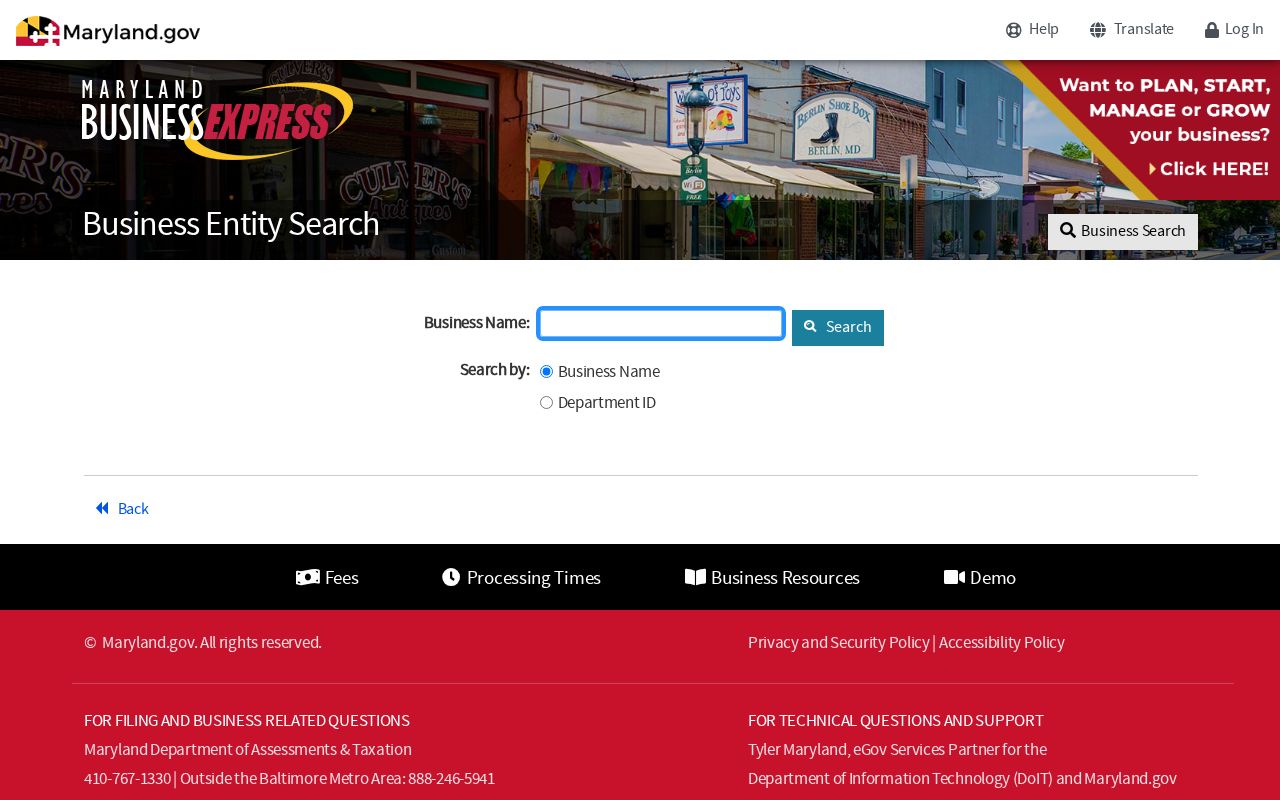
The form keeps a business-name search separate from a Department ID search. That separation helps keep an entity record distinct from any inference about a personal address. The DPSCS official gateway lays out the state's separate public-safety lookup routes.
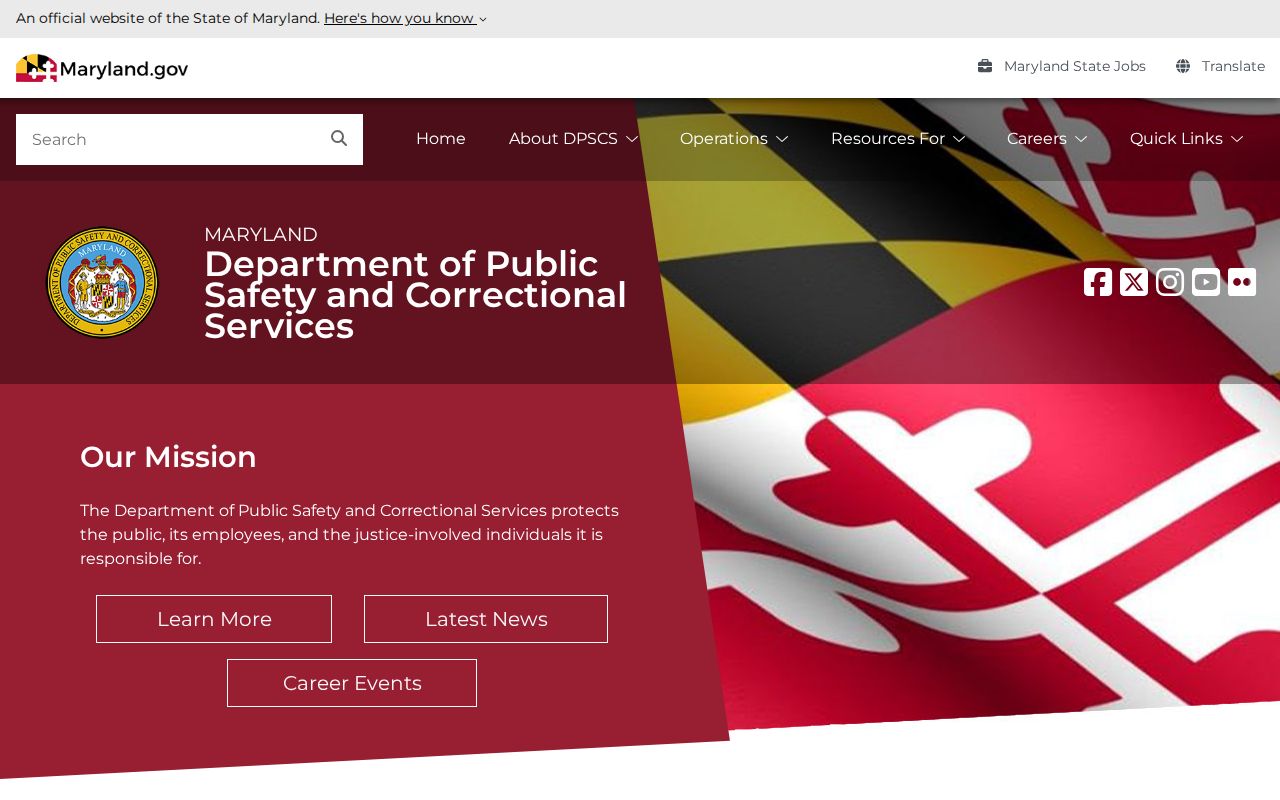
Use that gateway only within its stated purpose. Do not treat its categories as a catchall list of Potomac residents or a substitute for a proper resident lookup.
Potomac MPIA Requests for Existing Records
Maryland's Public Information Act covers the gap when a Montgomery County department holds a defined existing record. But it also applies when that office keeps the record off any portal. Maryland General Provisions Article, Title 4, sections 4-202 and 4-203 among them, calls for a prompt grant or denial. And no denial may come later than 30 days. Where production needs more than 10 working days, the custodian must send notice within that period. That notice must include an estimated time, a reason, and a fee range.
Keep the request narrow. Name the existing record type. Also include the address or person, the date range, and your preferred electronic format. Under the Attorney General manual, the first two hours of search and review are free. Reasonable cost-based fees may follow after that. Privacy, investigative, and security exemptions can still force redaction or withholding. And an MPIA request cannot make an office compile a new resident database.
Note: If the recipient is not the custodian, Maryland law requires a notice within 10 working days identifying that fact and, if known, the proper custodian.